

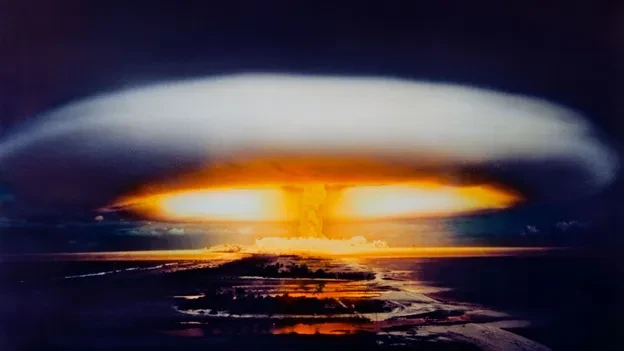
Britain is preparing for war. Are you?
Withington News — Withington News Editorial
The British government has quietly begun the most significant civil defence mobilisation since the Cold War. The language is careful. The briefings are discreet. But the direction of travel is unmistakable.
In the past eighteen months, the Ministry of Defence has published updated guidance on nuclear preparedness. The Home Office has revised its emergency planning frameworks. Local authorities have been instructed to review their civil contingencies arrangements. The National Resilience Framework — a document that did not exist five years ago — now runs to hundreds of pages.
None of this has been announced with fanfare. There have been no speeches from the steps of Downing Street. No prime ministerial address to the nation. The information is available, if you know where to look. Most people do not look.
Withington News has looked. What we found is this: Britain is less prepared for a major conflict than at any point since the Second World War. The institutions that would need to function under wartime conditions are underfunded, understaffed, and in some cases structurally incapable of performing their wartime roles. The population has not been informed. The conversation has not been had.
The Chief of the Defence Staff has warned that Britain must be ready to fight Russia within five years. The head of MI5 has described the threat as the most severe in his career. The head of NATO has said the alliance must prepare for a long war. These are not the words of alarmists. They are the words of the people whose job it is to know.
Withington News asks the question no one else will
This is not a comfortable article. It is not designed to reassure you. It is designed to inform you — because the alternative, which is to say nothing and hope for the best, is a form of negligence that Withington News is not willing to practise.
We have spent months researching this question. We have read the government guidance, the defence reviews, the academic literature on civil preparedness, and the historical record of what Britain looked like the last time it faced an existential military threat. What follows is what we found.
The fog of war
What the media is not telling you?
The dominant tone of the British media in 2026 is not sceptical. It is not questioning. It is what some would describe as warmongering.
There is a tradition in wartime Britain of calling the press the fourth estate — a check on power, a voice for the people. That tradition is under severe strain. The dominant tone of the British media in 2026 is not sceptical. It is not questioning. It is what some would describe as warmongering. Editors who have never served in the military, and who will not serve in any future conflict, are writing with enthusiasm about the necessity of confrontation.
The BBC, which is funded by the public and is legally required to be impartial, has in recent months broadcast a series of programmes that present military escalation as not merely inevitable but desirable. The framing is consistent: Russia is the aggressor, NATO is the defender, and the only question is how much force to apply. The possibility that diplomacy might be preferable to war is not seriously entertained.
This is not a defence of Russia. Russia's invasion of Ukraine was illegal, brutal, and indefensible. But the question of how Britain should respond to that invasion — and whether British citizens should be prepared to die in a conflict that began on the other side of a continent — is a question that deserves more than cheerleading.
The media's failure to ask hard questions about the costs of war is not a conspiracy. It is something more mundane and more dangerous: a collective failure of imagination. The journalists writing these pieces have not seen war. They do not know what it costs. They are writing about something they do not understand, and their readers are paying the price in misinformation.
Food security
Can Britain feed itself?
Britain imports approximately 46% of its food. In a conflict that disrupts global shipping lanes, that figure becomes a death sentence for the most vulnerable.
Britain is an island nation with a population of 67 million people and a domestic agricultural sector that can feed, at most, 60% of them. The remaining 40% depends on imports — from Europe, from the Americas, from supply chains that cross oceans and pass through chokepoints that would be among the first targets in any serious military conflict.
This is not a new problem. It was a problem in 1939, when the German U-boat campaign came within weeks of starving Britain into submission. The Battle of the Atlantic — the longest continuous military campaign of the Second World War — was fought not for territory but for food. Britain survived because of American convoys, Canadian grain, and the extraordinary discipline of a rationing system that reduced every citizen's diet to the minimum required for survival.
The rationing system worked because it was prepared in advance. The Ministry of Food had been planning since 1936. The ration books were printed before the war began. The distribution networks were established before the first U-boat sank the first merchant ship. Preparation was the difference between survival and starvation.
In 2026, there is no rationing plan. There is no Ministry of Food. There is no strategic food reserve of any meaningful size. The government's emergency food guidance — available on the GOV.UK website, if you search for it — recommends that households keep a three-day supply of food and water. Three days. In a conflict that could last years.
The supermarket supply chain, which delivers food to British shelves on a just-in-time basis with no buffer stock, would collapse within days of any serious disruption to shipping or road transport. The shelves would empty. The panic buying that accompanied the first days of the COVID-19 pandemic — when people were not actually facing a food shortage — gives some indication of what genuine scarcity would look like.
The Thucydides Trap
Why the Thucydides Trap applies today?
In 431 BC, the Greek historian Thucydides wrote about the war between Athens and Sparta. His conclusion was simple and has never been improved upon: the growth of Athenian power, and the fear this caused in Sparta, made war inevitable. The dynamic he described — a rising power threatening an established one, with conflict as the result — has been called the Thucydides Trap.
Harvard political scientist Graham Allison studied sixteen cases in the past five hundred years in which a rising power challenged a ruling one. Twelve of those cases ended in war.
China is the rising power of the twenty-first century. The United States is the established one. Russia, in this analysis, is a secondary actor — a declining power making a last bid for relevance before its demographic and economic collapse makes such bids impossible. The war in Ukraine is, in this reading, not the main event. It is the opening act.
Britain's position in this analysis is uncomfortable. It is a medium-sized power with a large military reputation, a shrinking military capability, and a political class that has not yet come to terms with either fact. It has committed itself to NATO, which means it has committed itself to the defence of every NATO member, including those on Russia's border. It has committed itself to supporting Ukraine, which means it has committed itself to a conflict that shows no sign of ending.
Twelve of the sixteen cases in which a rising power challenged a ruling one ended in war. We are living through case seventeen.
The question that British politicians are not asking — and that British journalists are not pressing them to answer — is this: what is the exit strategy? At what point does Britain decide that the costs of continued involvement outweigh the benefits? Who makes that decision? On what basis? With what democratic mandate?
These are not defeatist questions. They are the questions that any serious democracy should be asking before it commits its citizens to a war. The fact that they are not being asked is itself a form of answer.
The Thucydides Trap is not destiny. It is a tendency. Tendencies can be resisted. But resistance requires awareness, and awareness requires the kind of honest public conversation that Britain is not currently having.
What the parties say
The political consensus on war
All three major parties in Britain support continued military assistance to Ukraine and increased defence spending. The differences between them are of degree, not direction.
Labour
Supports NATO commitments fully. Has increased defence spending to 2.5% of GDP. Has committed to further increases. Has not set out a diplomatic strategy for ending the conflict in Ukraine.
Conservative
Supports NATO commitments fully. Argues for faster increases in defence spending. Has criticised the government for not doing enough. Has not set out a diplomatic strategy for ending the conflict in Ukraine.
Liberal Democrats
Supports NATO commitments fully. Has called for stronger support for Ukraine. Has not set out a diplomatic strategy for ending the conflict in Ukraine.
Reform UK
Has expressed scepticism about the scale of support for Ukraine. Has called for a negotiated settlement. Has not set out a detailed alternative foreign policy.
Green Party
Has called for a ceasefire and negotiations. Has opposed increases in defence spending. Has not set out how a ceasefire could be achieved given current Russian positions.
Institutional readiness
Is Britain really ready?
An assessment of the institutions that would need to function in wartime
A country's ability to fight a war depends not only on its military but on the civilian institutions that support it. Here is an honest assessment of where Britain stands.
The NHS
The NHS is operating at or beyond capacity in peacetime. Its ability to absorb mass casualty events — the kind that would result from conventional or nuclear attack — is severely limited. Waiting lists are at record highs. Staff shortages are acute. The surge capacity that would be required in wartime does not currently exist.
The Army
The British Army has been reduced to its smallest size since the Napoleonic Wars. Current strength is approximately 73,000 regular soldiers — down from over 100,000 a decade ago. The equipment programme has been underfunded for years. The army is capable of significant operations but would struggle to sustain a major land war without substantial reinforcement.
The Royal Air Force
The RAF operates the F-35B Lightning II — one of the most capable combat aircraft in the world — alongside Typhoon multirole fighters. Its aerial defence posture has been strengthened in recent years, with increased Quick Reaction Alert commitments over NATO's eastern flank. However, total fast jet numbers remain lower than at any point in the RAF's history, and the service faces ongoing challenges in pilot retention and ground crew capacity.
The Royal Navy
The Royal Navy operates two aircraft carriers — HMS Queen Elizabeth and HMS Prince of Wales — but has struggled to keep both operational simultaneously due to crew shortages and maintenance demands. The submarine fleet, which carries Britain's nuclear deterrent, is considered fully operational. Surface fleet numbers have declined significantly over the past two decades.
The Police
British police forces are not armed and are not trained for wartime civil order operations. In a major conflict, the military would need to assume many of the functions currently performed by police. The transition planning for this has not been publicly disclosed.
Civil aviation — the Withington connection

Before the Blitz, before the ration books — Withington was already at war in the air. Alexandra Park was requisitioned in 1917 and converted into a military aerodrome to train Royal Flying Corps pilots. The RFC became the Royal Air Force in April 1918. The young men who trained at Alexandra Park flew biplanes to the Western Front. Many did not come back. The park that Withington residents walk through today was once a place where Britain's air power began.
Withington News has investigated the full history of Alexandra Park Aerodrome — from its wartime origins in 1917 to its role in the birth of British civil aviation.
Read the full aerodrome history →The question is not whether Britain has the will to fight. The question is whether it has the means. The answer, on current evidence, is: not yet. And the gap between 'not yet' and 'ready' is not one that can be closed quickly. It requires investment, planning, and the kind of honest public conversation that Britain's political class has so far been unwilling to have. The last time Britain's home front was seriously tested was 1940. The institutional memory of that period has largely been lost.
Withington in wartime
What war actually looked like here
The history of Withington in wartime is not abstract. It happened on these streets. The people who lived through it were your neighbours, your grandparents, the residents of the houses you walk past every day. This is what they endured.
The Manchester Blitz — December 1940
On the night of 22 December 1940, the Luftwaffe launched the heaviest sustained bombing raid on Manchester of the entire war. Over two nights, more than 400 German aircraft dropped high-explosive bombs and incendiary devices across the city. The city centre was devastated. But the raids did not stop at the city centre.
In Withington, the consequences were direct and catastrophic. A parachute landmine — one of the most destructive weapons in the German arsenal, designed to detonate above ground and maximise blast damage across a wide area — exploded directly on an ARP warden post on Burton Road. Five wardens were killed instantly. Among them were a local Withington dentist, Mr Barber, and Hyman Lob, a beloved master at Manchester Grammar School. The men had assembled at their post to do their duty. They did not survive the night.
A second parachute landmine exploded on Princess Road, less than 500 yards away. The blast shattered windows across Withington and left a massive crater. Civil defence workers across the city were tasked in the days that followed with what the official records describe, in the careful language of bureaucracy, as 'recovery operations'. What that meant in practice was this: teams of men and women, working under blackout conditions, collecting human remains from rubble, from craters, from the ruins of houses where families had been sheltering.
In Manchester's Southern Cemetery — located on the border of Withington and Chorlton, a place you may have walked past without knowing its full history — a communal grave holds 14 completely unidentified victims from these raids. They could not be identified. There was not enough left of them to identify. That is what a parachute landmine does to a human body at close range. That is what war looks like when it arrives on your street.
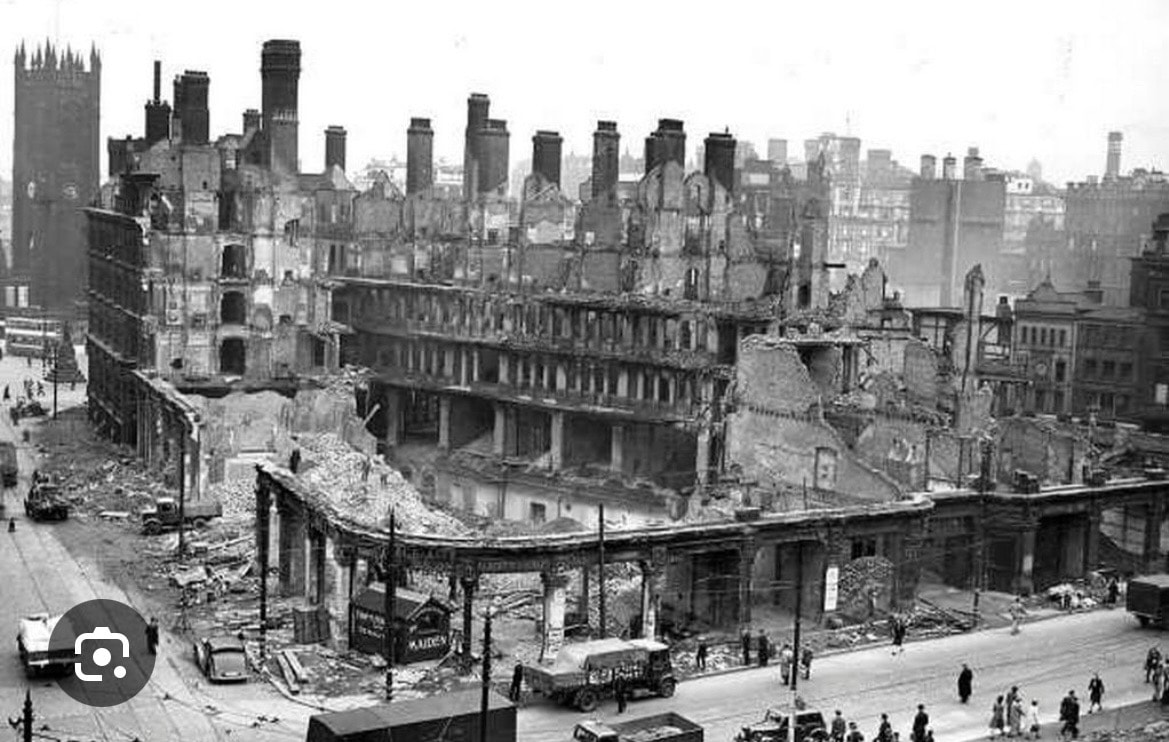
The fires burned for two nights. The glow was visible from thirty miles away. Withington residents who had taken shelter in cellars and Anderson shelters emerged to find the city they knew transformed. Streets they had walked every day were unrecognisable. Landmarks were gone. The smell of burning lasted for weeks.
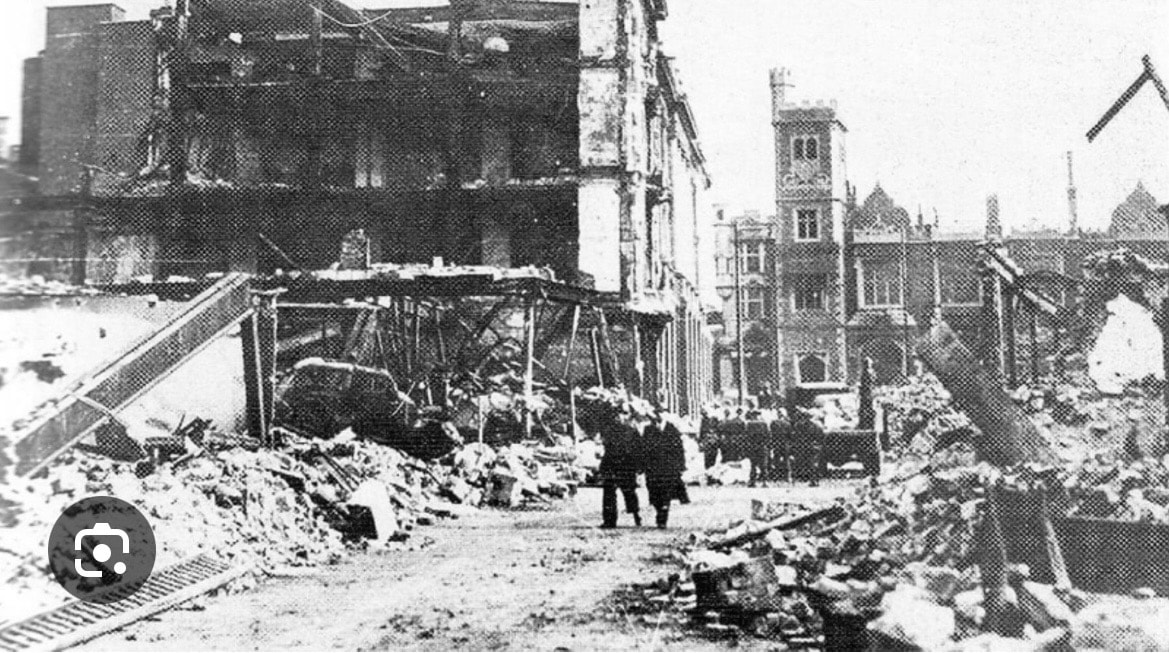
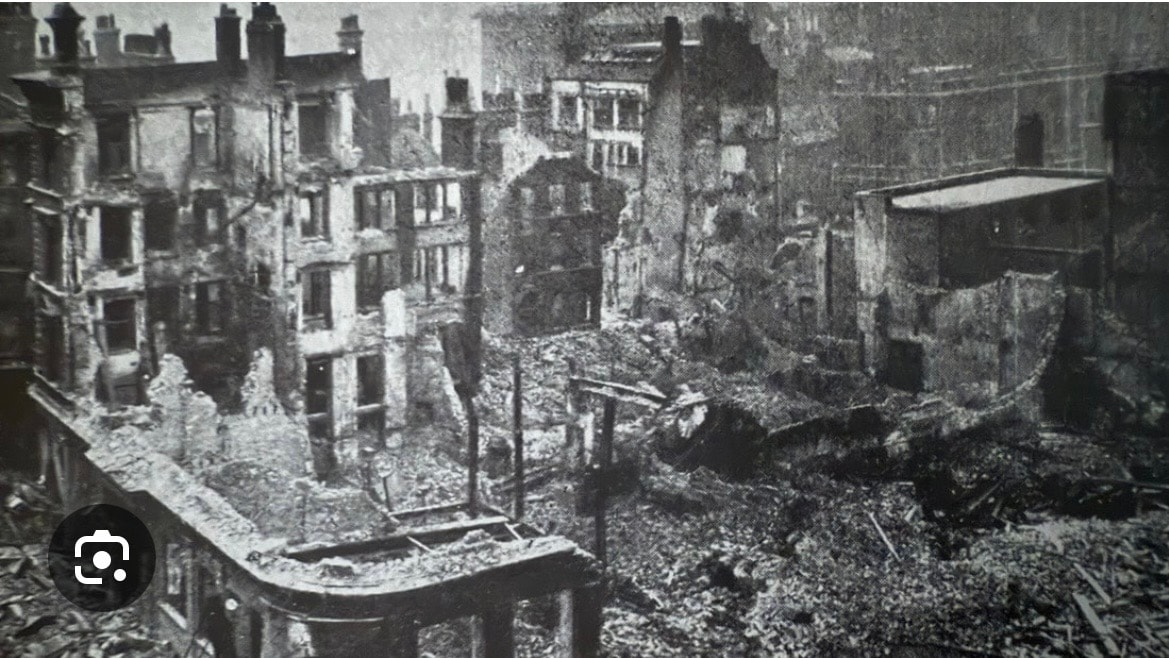
What the photographs cannot convey is the sound. The drone of the bombers, the crack of anti-aircraft guns, the whistle of falling bombs, the concussion of each explosion felt in the chest. Those who survived it never forgot it. Those who grew up after it never understood it. That gap in understanding is precisely what the government is now asking us to close.
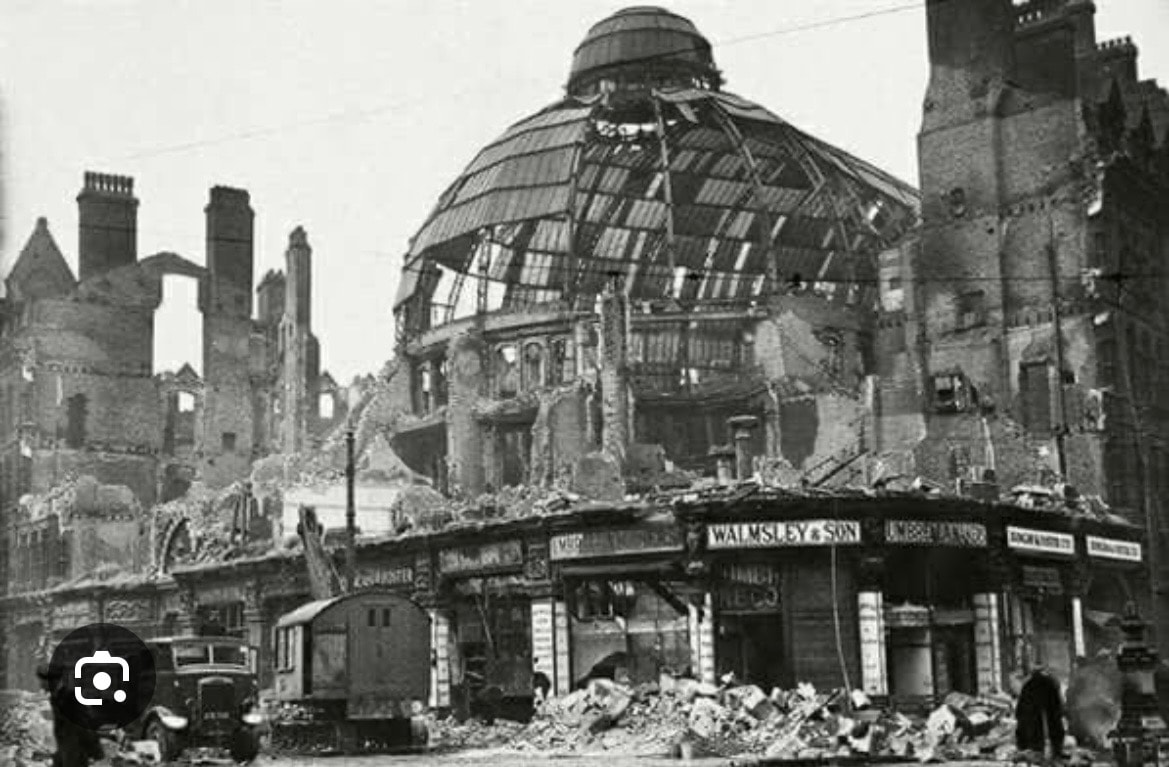
Five ARP wardens died on Burton Road. A communal grave in Southern Cemetery holds 14 victims who could never be identified. This happened here. On these streets.
Rationing, hunger, and the Dig for Victory
The bombing was the most visible face of wartime Withington. But the slow grind of scarcity shaped every day of life from 1940 to 1954 — fourteen years of restriction, calculation, and making do.
Rationing began in January 1940. Every resident of Withington was issued a ration book — the British equivalent of food stamps, though the government of the time would never have used that phrase. The books contained coupons that had to be surrendered at local shops for each purchase. The weekly allocation was brutal in its smallness: one egg. A few ounces of butter. A tiny portion of meat. Sugar, cheese, and bacon were all strictly controlled. Chocolate was rationed until 1953.
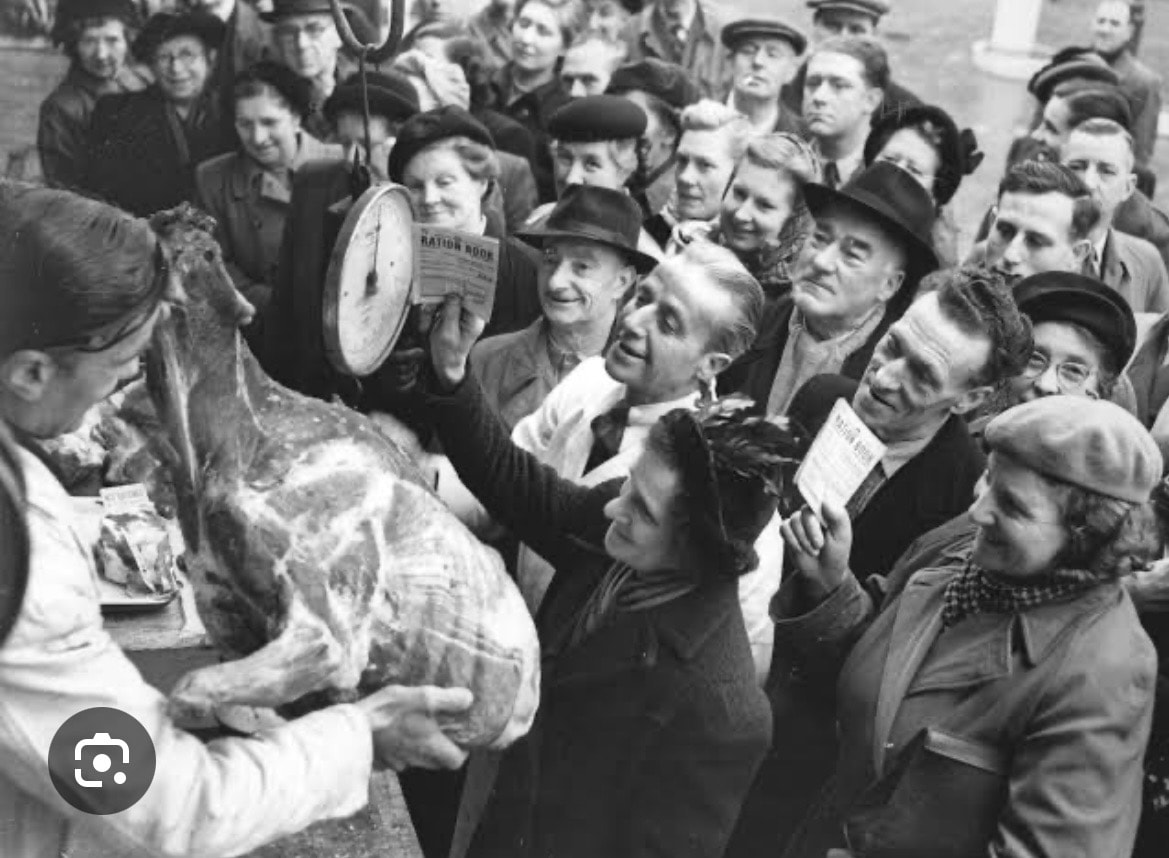
The local shops of Withington Village — the butchers, the grocers, the dairy — became the front line of a domestic war of survival. Shopkeepers were required to register customers and enforce the allocations. There was no flexibility, no exceptions, and no black market that ordinary working families could afford. You ate what the coupon allowed. Nothing more.
The government's response to the food crisis was the Dig for Victory campaign — an instruction to the population to turn every available piece of land into a vegetable plot. Gardens, parks, and even the verges of Withington's streets were dug up and planted. Families grew potatoes, cabbages, and carrots where flowers had been. The unrationed foods — potatoes, bread, and, notoriously, whale meat — became the staples of a diet that kept people alive but left them permanently hungry.

Coal, gas, and electricity were heavily restricted to ensure that industrial factories had enough power for the military effort. The famous wartime instruction — 'no more than five inches of water in a bath' — was not a suggestion. It was a public conservation campaign backed by social pressure and the implicit threat of censure. People complied because they had no choice, and because the alternative was to be seen as unpatriotic in a neighbourhood where everyone knew everyone else's business.
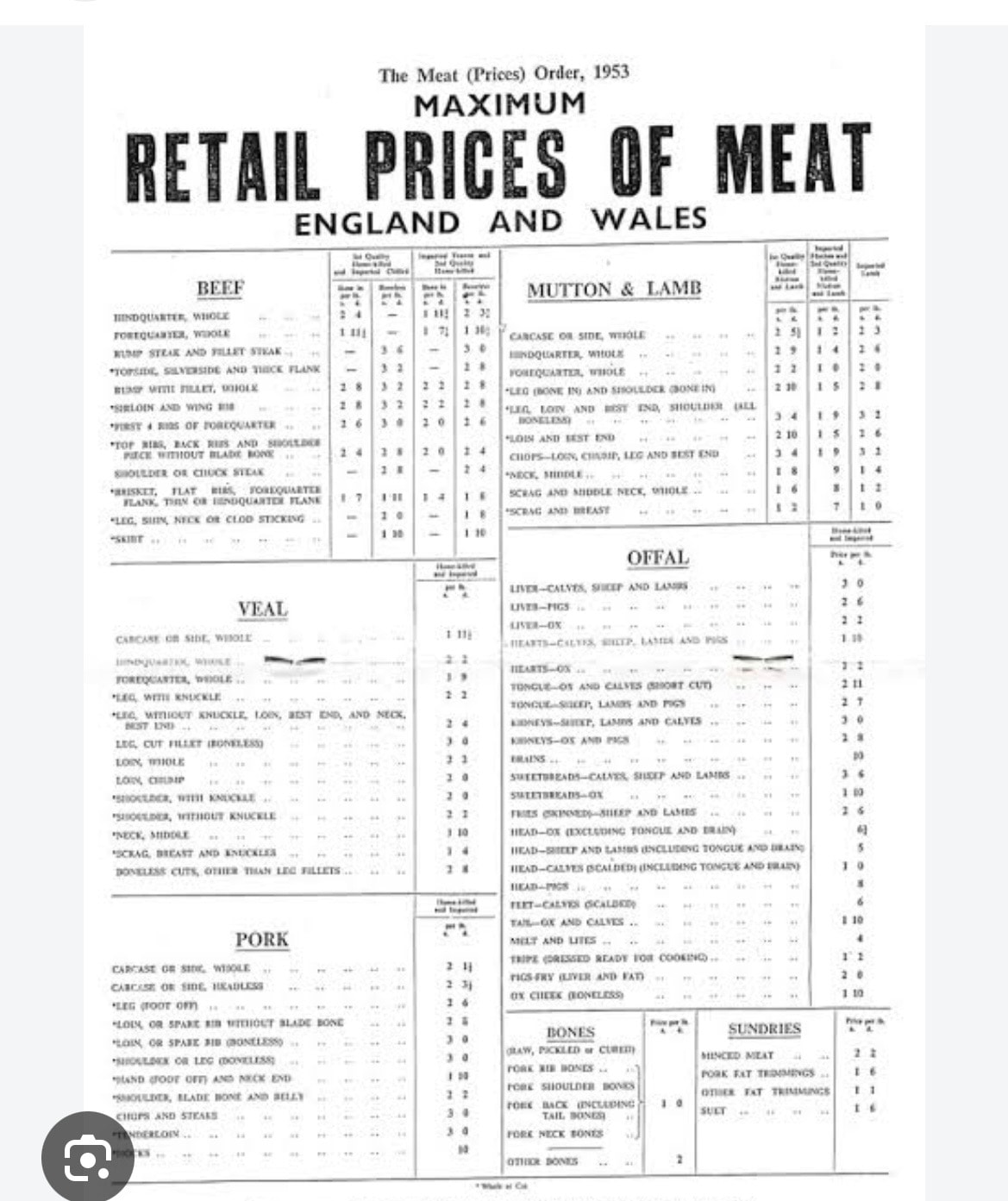
Rationing did not end with the war. It continued until 1954 — nine years after VE Day. The generation that grew up in Withington in the 1940s and early 1950s knew nothing else. They did not know what it felt like to walk into a shop and buy what they wanted. That is the generation whose children and grandchildren are now being asked whether they are prepared for the coming war.
Alexandra Park Aerodrome — where Withington went to war in the air
Before the Blitz, before the ration books, before the Anderson shelters — Withington was already at war in the air. Alexandra Park, the Victorian pleasure ground at the heart of the neighbourhood, was requisitioned in 1917 and converted into a military aerodrome. It was one of the earliest airfields in the Manchester area, and its story connects Withington directly to the birth of British military aviation.
The aerodrome was established to train Royal Flying Corps pilots during the First World War. The RFC — which became the Royal Air Force in April 1918 — was a new and experimental service, and the demand for trained pilots was desperate. Young men from across the country arrived at Alexandra Park to learn to fly aircraft that were, by any modern standard, extraordinarily dangerous. The casualty rate in training was significant. The casualty rate in combat was catastrophic.
The aircraft that flew from Alexandra Park were the biplanes of the early aviation age — fragile, underpowered, and unforgiving of error. The pilots who flew them were often teenagers. The life expectancy of a new RFC pilot on the Western Front in 1917 was measured in weeks. The men who trained at Alexandra Park knew this. They flew anyway.
The aerodrome closed after the First World War and Alexandra Park was returned to public use. But its wartime history left a mark on the neighbourhood that has never entirely faded. The park that Withington residents walk through today — the boating lake, the bandstand, the open grassland — was once a place where young men learned to fly, and where some of them flew for the last time.
Alexandra Park was requisitioned in 1917 and became a military aerodrome. The young men who trained there flew biplanes to the Western Front. Many did not come back.
Withington News has investigated the full history of Alexandra Park Aerodrome — from its wartime origins in 1917 to its role in the birth of British civil aviation.
Read the full aerodrome history →Voices from Withington
These are residents of Withington who lived through the Second World War and gave their accounts to local historians. Their memories are part of the neighbourhood's record.
Beryl Kennedy
Withington
Remembers Withington during WWII, especially the Manchester Blitz of 1940.
Florence Swinton
Withington
Recalls Withington during WWII, from 1940 through to VE Day.
Joan Rowland
Withington
Has written a memoir of Withington from WWI through to the 1950s, covering her family's experience, Withington Village, and wartime events.
Kathleen McKenna
Withington
Served in the Land Army during WWII and was injured in a farm accident. Recalls Withington from those days onwards.
Anonymous resident
Withington
Recalls bombing in Withington during his early childhood in WWII, and life in the neighbourhood from the war onwards. He has asked to remain anonymous.
Coralie Adamson
Withington
Recalls post-war Withington and the early days of the Civic Society, of which she was a founder and Life Member. She also founded the Civic Society newsletter News and Views and edited it for 23 years. Coralie died a few months after giving this interview.
Bygone Withington
To celebrate Withington Library's Golden Jubilee in 1977, the City of Manchester Cultural Services published Bygone Withington — a collection of essays by local residents recalling Withington during WWI, the inter-war period, and WWII. It remains one of the most vivid primary sources for the neighbourhood's wartime history.
Nuclear preparedness
The bomb, the blast, and what comes after
What a nuclear strike on Britain would actually mean
The British government's nuclear preparedness guidance has been updated three times in the past two years. The updates have not been widely reported. They should have been.
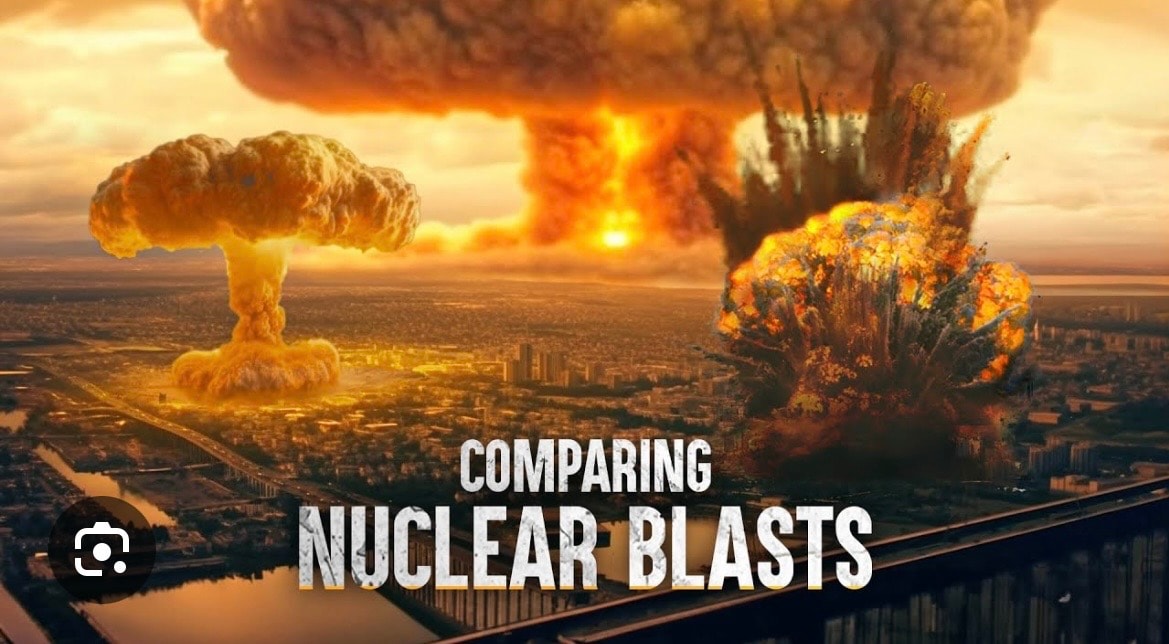
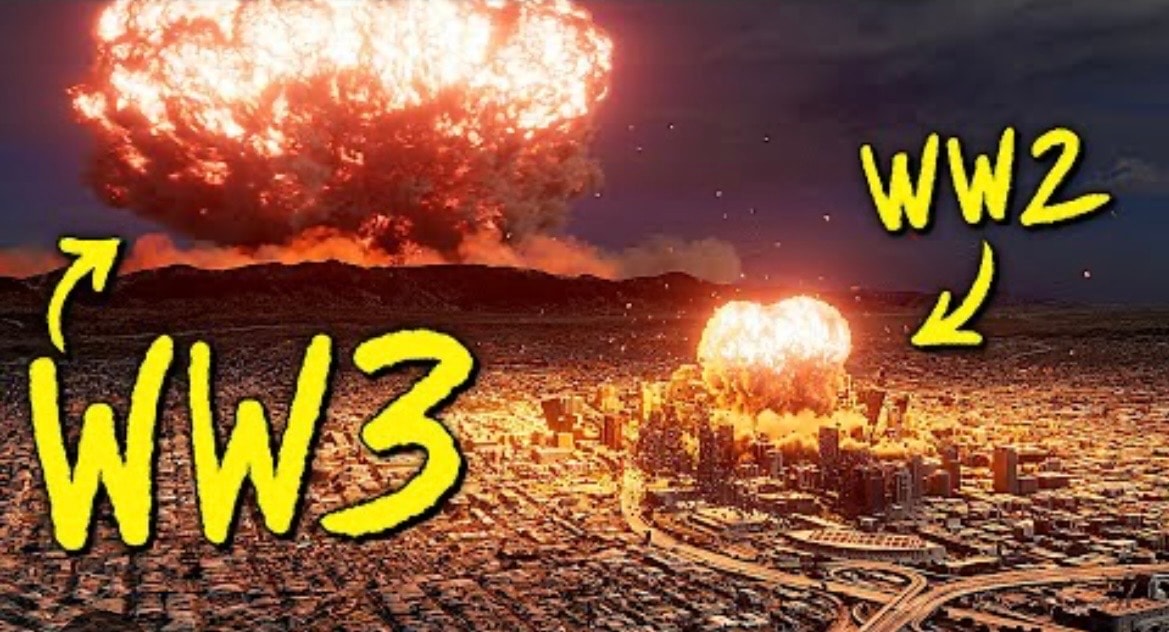
A nuclear weapon detonated over a British city would kill tens of thousands of people instantly. The blast radius of a modern thermonuclear warhead — the kind that Russia, China, and other nuclear powers currently deploy — is measured in miles, not yards. The thermal pulse would cause third-degree burns at distances that would surprise most people who have not studied the subject.
The immediate survivors — those outside the blast radius but within the fallout zone — would face a different set of problems. Radiation sickness. Contaminated water. The collapse of medical services. The breakdown of supply chains. The psychological impact of living in a city that has just been partially destroyed by a nuclear weapon.
The government's advice — shelter in place, seal windows and doors, stay tuned to emergency broadcasts — is not wrong. It is simply incomplete. It assumes that the infrastructure required to deliver emergency broadcasts will still be functioning. It assumes that the buildings people are sheltering in will still be standing. It assumes a level of social order that may not survive the first hours after a strike.
Read the government's nuclear preparedness guidance → ↗The psychological dimension
Civil defence planners in the Cold War era understood something that their modern counterparts appear to have forgotten: the psychological impact of nuclear threat is itself a form of warfare. The Soviet strategy of nuclear intimidation was designed not merely to destroy cities but to paralyse decision-making, undermine social cohesion, and create a population too frightened to resist.
The antidote to psychological warfare is preparation. A population that knows what to do in an emergency is harder to paralyse than one that does not. A community that has discussed the risks and made plans is more resilient than one that has not. The conversation that Withington News is trying to start is not designed to frighten people. It is designed to do the opposite.
Children and nuclear preparedness
The question of how to prepare children for the possibility of nuclear conflict is one that no government guidance currently addresses directly. The official advice is written for adults. It assumes adult comprehension, adult decision-making capacity, and adult access to resources.
In the Second World War, the British government evacuated 1.5 million children from cities to rural areas in the first days of the conflict. Operation Pied Piper — the largest mass movement of children in British history — was planned years in advance. The logistics were worked out before the first bomb fell. The children were moved before the danger arrived.

The question of how to prepare children for the possibility of nuclear conflict is one that no government guidance currently addresses directly. The official advice is written for adults. It assumes adult comprehension, adult decision-making capacity, and adult access to resources.
In the Second World War, the British government evacuated 1.5 million children from cities to rural areas in the first days of the conflict. Operation Pied Piper — the largest mass movement of children in British history — was planned years in advance. The logistics were worked out before the first bomb fell. The children were moved before the danger arrived.
What the government actually says
The UK government's current guidance on nuclear preparedness is available at gov.uk. It recommends that households keep a supply of food, water, and essential medicines. It recommends that people know how to shelter in place. It recommends that people stay informed via emergency broadcasts.
What it does not say is how long people should expect to shelter. It does not say what to do if the emergency broadcast system fails. It does not say how to obtain clean water if the mains supply is contaminated. It does not say what to do with children, elderly relatives, or people with disabilities who cannot shelter independently.
Read the government's nuclear preparedness guidance → ↗The preparedness checklist
What you actually need — and where to get it in Withington
The government recommends a 72-hour emergency kit. We think that is the minimum, not the target. Here is what you need, why you need it, and where you can buy it locally.

Water
4 litres per person per day minimum. Store in sealed containers. Rotate every six months.
Where to buy: Withington Pharmacy, Burton Road; Co-op, Withington Village
Non-perishable food
Tinned goods, dried pasta, rice, pulses. Enough for at least 72 hours, ideally two weeks.
Where to buy: Co-op, Withington Village; Nassar Halal, Wilmslow Road
First aid kit
Plasters, bandages, antiseptic, pain relief, any prescription medications.
Where to buy: Withington Pharmacy, Burton Road
Torch and batteries
LED torch with spare batteries. Do not rely on your phone.
Where to buy: Co-op, Withington Village; Poundland, Fallowfield
Battery or wind-up radio
Essential for receiving emergency broadcasts if power and internet are down.
Where to buy: Argos, Fallowfield; Amazon (order in advance)
Cash
Card payments will not work if power is down. Keep small denominations.
Where to buy: Barclays, Withington Village; Nationwide, Withington Village
Warm clothing and blankets
Central heating will not function without power or gas. Prepare for cold.
Where to buy: British Heart Foundation, Withington Village; charity shops on Wilmslow Road
Copies of important documents
Passport, insurance documents, medical records. Store in a waterproof bag.
Where to buy: Print at Withington Library, Burton Road
The 72-hour rule
The government's 72-hour guidance is based on the assumption that emergency services will be able to restore basic infrastructure within three days of a major incident. That assumption is based on peacetime experience.
In a wartime scenario — or in a major infrastructure attack of the kind that has been carried out against Ukraine's power grid — the restoration timeline could be measured in weeks or months, not days. The 72-hour kit is a starting point. It is not a plan.
Withington News recommends that households aim for a two-week supply of essential items. This is not paranoia. It is the standard recommended by emergency preparedness experts in countries — Finland, Sweden, Norway — that take civil defence seriously.
Community Vote
Cast your vote
Tell us what you think
Are you prepared for the coming war?
This poll is open to everyone. Your email is used only to prevent duplicate votes and will never be published or shared.